Aluminum vs Steel Solar Mounting System: Which Is Better?
Quick Answer / Expert Verdict: There is no universal winner. For coastal areas, commercial rooftops, and solar carport mounting systems where weight and extreme corrosion resistance are priorities, choose an aluminum solar mounting system. For large-scale utility projects and severe weather open terrains, hot-dip galvanized steel solar racking offers the maximum structural strength and best cost-efficiency.
When EPCs and developers plan a commercial or utility-scale PV project, selecting the right material for the PV mounting system is a critical engineering decision. The foundation of your solar array must withstand decades of wind, snow, and environmental wear.
As a leading global manufacturer, Xiamen Sunforson Power Co., Ltd evaluates site-specific geological and meteorological data to recommend the optimal solution. In this comprehensive guide, we break down the technical differences between aluminum and steel structures to help you maximize your project's ROI.
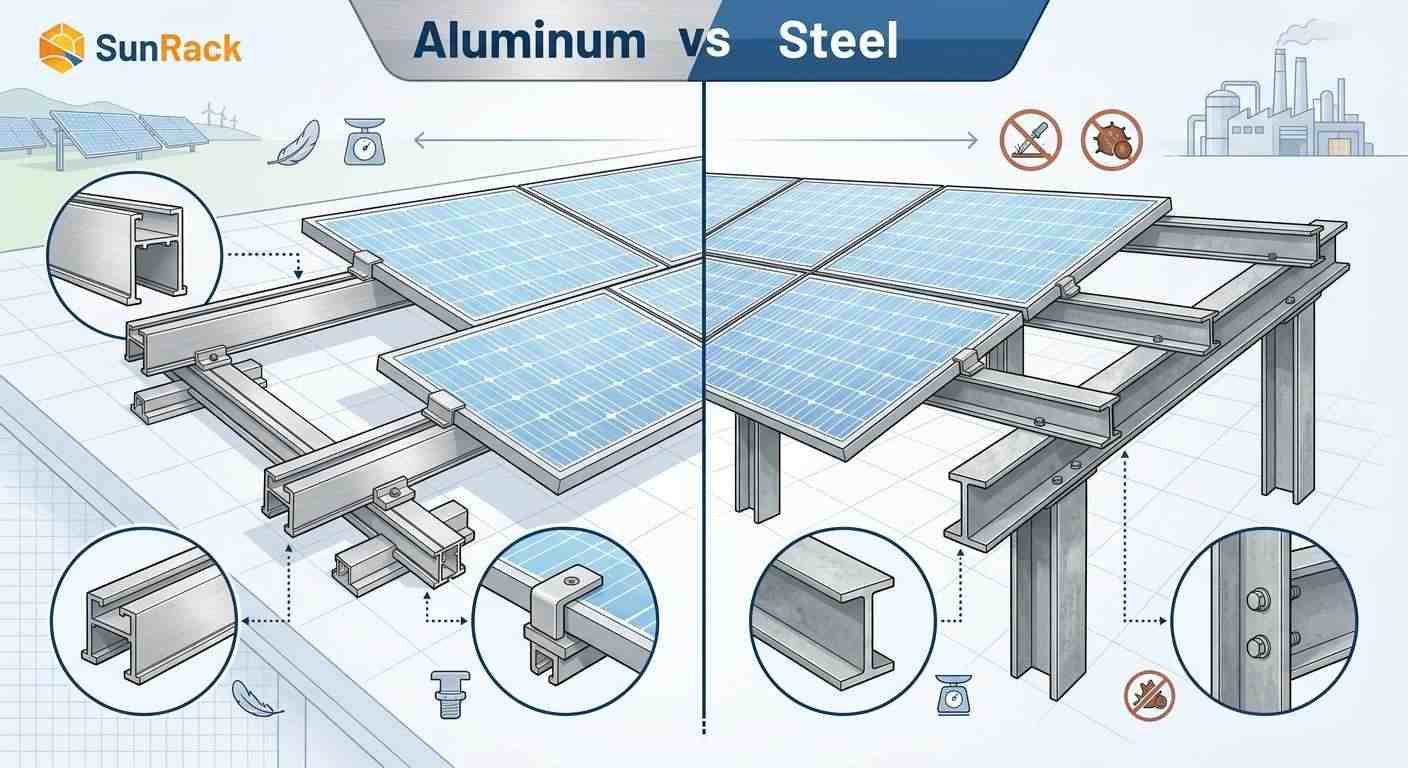
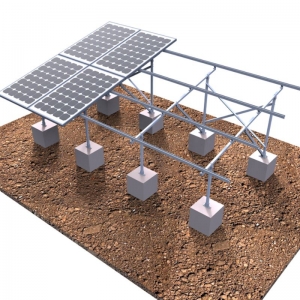
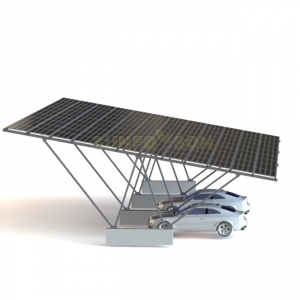
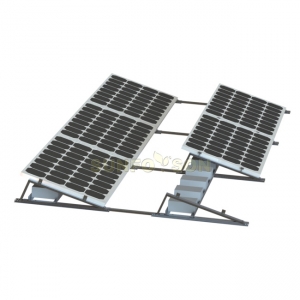
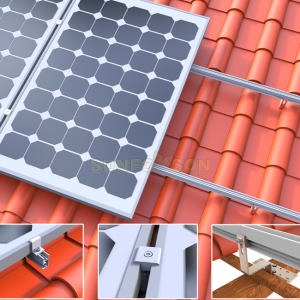
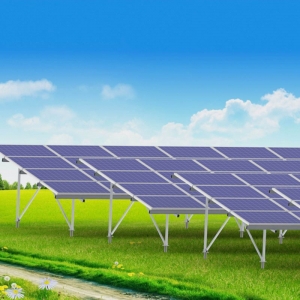
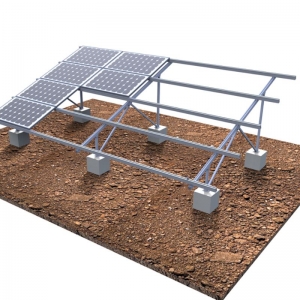
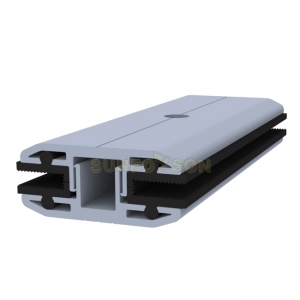
Figure 1: SunRack Aluminum and Galvanized Steel Solar Mounting Structures
Understanding Aluminum Solar Mounting Systems (AL6005-T5)
Aluminum is highly favored for distributed generation projects, commercial rooftops, and architectural solar integrations. At Sunforson, our aluminum solar mounting structures undergo a strict anodizing process (typically 12μm or customized up to 20μm) to significantly enhance their natural anti-corrosion properties.
Why do many developers prefer aluminum? The primary advantage lies in its physical properties. Being about one-third the weight of steel, it drastically reduces the dead load on buildings, making it the top choice for solar roof mounting systems and aging industrial roofs.
- Exceptional Anti-Corrosion: The dense anodized oxide layer makes aluminum incredibly resistant to rust. It performs flawlessly in high-humidity regions, chemical industrial zones, or coastal environments with severe salt spray.
- Installation Speed: Lighter materials mean faster manual handling on rooftops. Aluminum profiles can be easily cut or adjusted on-site, saving significant labor costs.
- Aesthetics & Flexibility: It offers a sleek, modern, and highly polished appearance, which is ideal for visible structures like a BIPV mounting system or highly utilized commercial solar carports.
The Power of Hot-Dip Galvanized Steel Solar Racking (Q235B / Q355B)
While aluminum dominates the roof, steel is the undisputed backbone of heavy-duty and utility-scale solar farms. To prevent oxidation and degradation in soil, structural carbon steel is treated with a thick layer of hot-dip galvanization (average 65μm to 85μm, depending on soil corrosivity).
When dealing with massive ground-mounted solar plants, structural integrity under extreme weather is paramount. Galvanized steel provides the sheer mass and tensile strength required to anchor thousands of solar panels securely to the earth.
- Maximum Load Capacity: Steel can withstand extreme hurricane-level wind loads and heavy snow loads, making it the standard for robust ground solar mounting systems.
- Longer Spans & Fewer Piles: Its high tensile strength allows for longer spans between foundations. This reduces the total number of ramming piles or concrete bases needed per megawatt, accelerating large-scale deployment.
- Cost-Effective at Scale: For massive MW or GW-level ground projects, steel generally provides a significantly lower cost per watt compared to aluminum, maximizing the ROI for large solar developers.
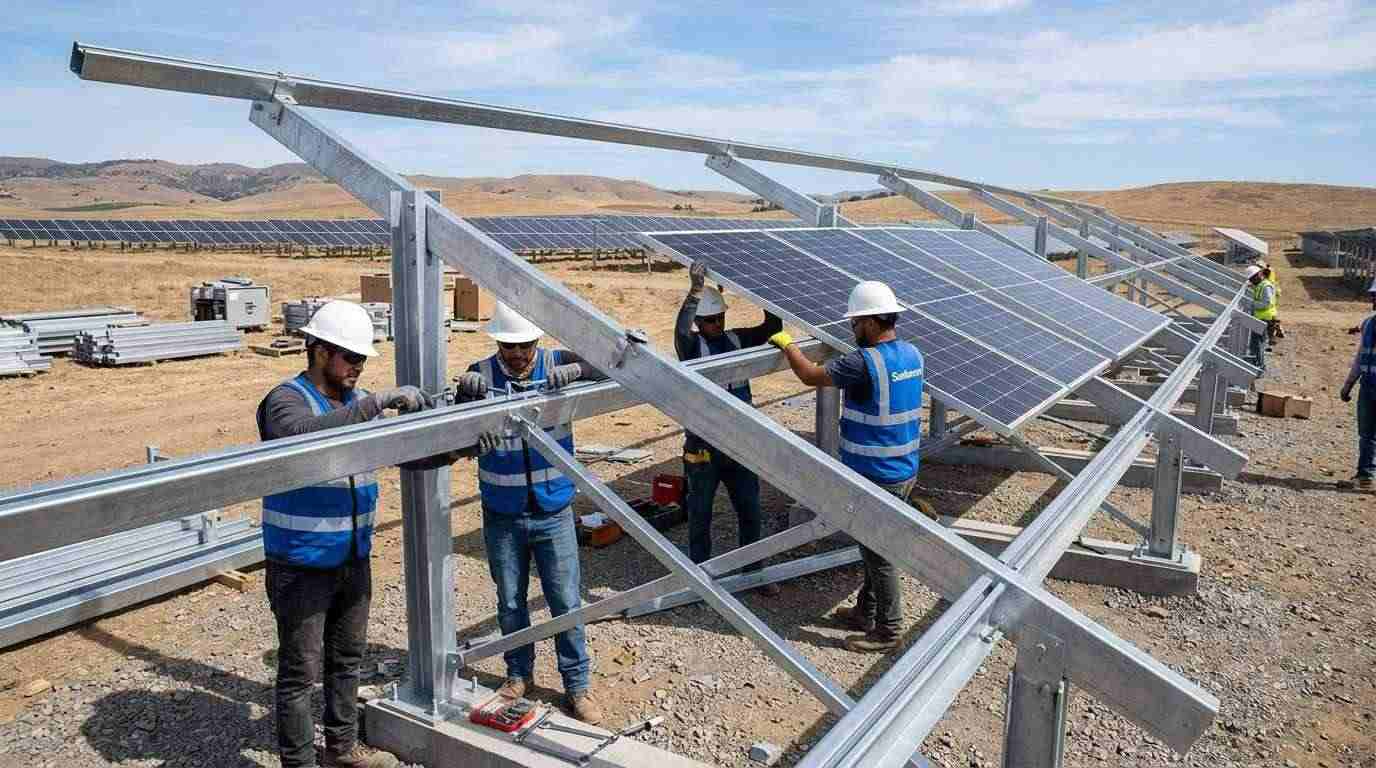
Figure 2: Utility-scale ground mount using galvanized steel piles
Key Factors: Wind Load, Snow Load, and Environment
Choosing between these two materials isn't just about price. Engineering requirements play a massive role. If your project is located in a region with heavy snowfall, steel's rigidity prevents the racking from bending under the weight of accumulated snow.
Conversely, if your project is near the ocean, the high salinity in the air will quickly degrade standard materials. In these scenarios, high-grade anodized aluminum or heavily galvanized steel (with epoxy coatings) becomes mandatory to ensure the 25-year design lifespan.
Head-to-Head Technical Comparison
| Technical Parameter | Aluminum (AL6005-T5) | Galvanized Steel (Q235/Q355) |
|---|---|---|
| Weight & Density | Lightweight (~2.7g/cm³) | Heavy & Robust (~7.8g/cm³) |
| Corrosion Resistance | Excellent (Anodized Layer) | Very Good (Hot-dip Galvanized) |
| Tensile Strength | Standard to High (260 MPa) | Extremely High (Up to 450+ MPa) |
| Material Cost | Relatively Higher | More Economical at scale |
| Ideal Applications | Roof Mount, Carport Mount, BIPV | Utility Ground Mount System |
Frequently Asked Questions (FAQ) for Solar Developers
Q1: Is an aluminum solar mounting system cheaper than steel?
No, raw aluminum is generally more expensive than steel per kilogram. However, because aluminum is much lighter, it can save significantly on shipping, handling, and installation labor costs, making the total project cost highly competitive for commercial rooftop projects.
Q2: What is the lifespan of Sunforson's mounting brackets?
Both our aluminum and hot-dip galvanized steel SunRack solar mounting systems are engineered for a design life of over 25 years. As a reliable solar mounting manufacturer, we provide up to a 10-year warranty on materials and structural integrity.
Q3: Can I mix aluminum and steel in one solar project?
Absolutely. Hybrid engineering designs are very common in the industry. For instance, developers often use galvanized steel for the main ground piles to ensure strong soil anchoring, while utilizing aluminum rails on top for easier panel installation, alignment, and reduced top-weight.
Q4: Which material offers faster installation for EPC companies?
Aluminum systems generally offer faster installation because the components are lighter to carry and easier to handle manually. Furthermore, Sunforson provides highly pre-assembled aluminum components (like pre-assembled tripods), which drastically cuts down on-site labor time.
Looking for a Reliable Solar Mounting System Manufacturer?
With proven installations in over 80 countries, Sunforson provides professional structural calculation and customized engineering designs for any terrain, wind load, or roof type. Let our experts analyze your site data and help you choose the best material to maximize your solar investment.
Get a free engineering proposal today: info@sunforson.com.